
The Real-Life Stories Behind Our Exhibits: The Albert Pattern Shako
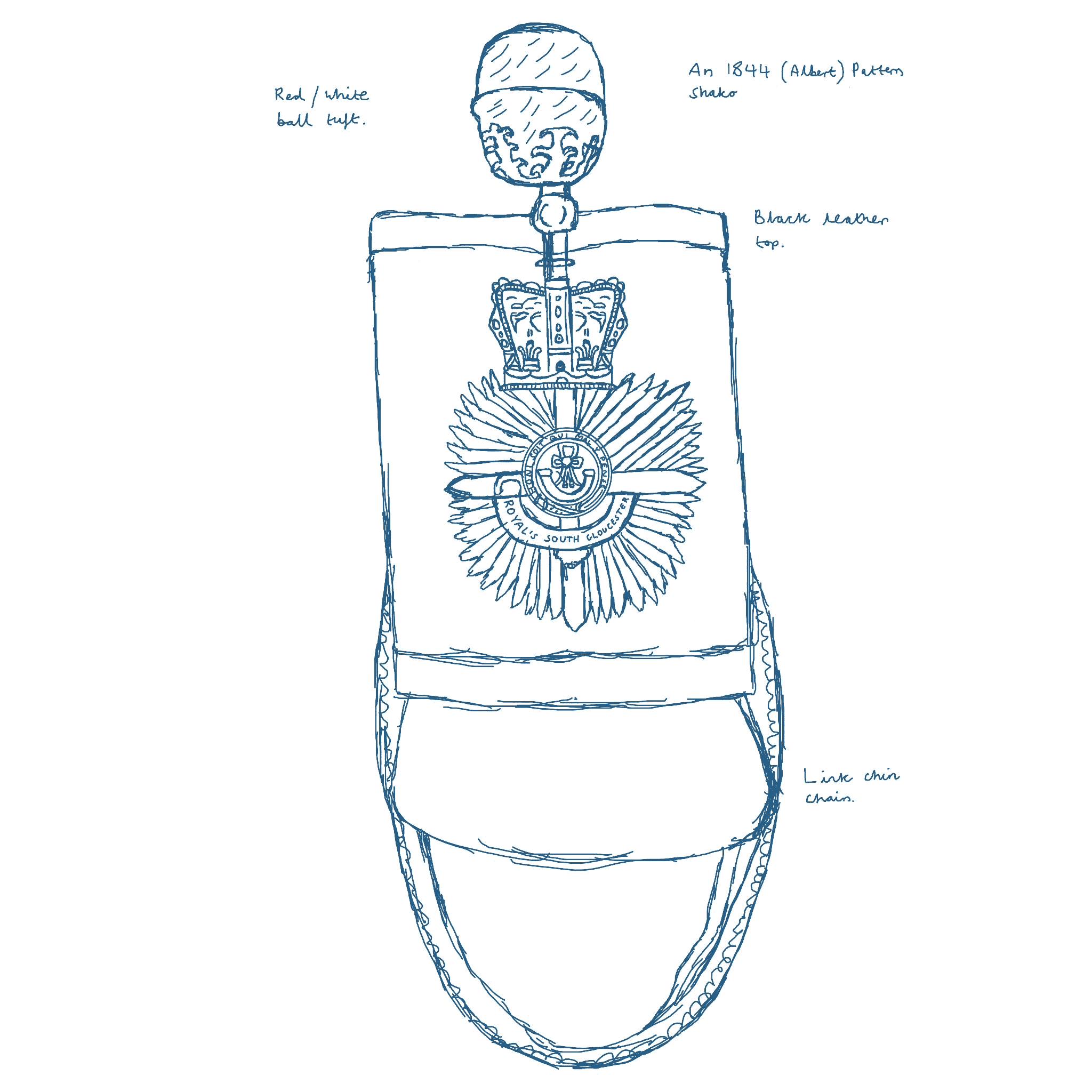
At the Soldiers of Gloucestershire Museum, every exhibit has a story to tell. Our Real-Life Stories Behind Our Exhibitsseries delves into the history of key artifacts, providing insight into the lives of the soldiers who once wore and used them. In this article, we explore the Albert Pattern Other Ranks' Shako, an iconic piece of military headgear worn by the Royal South Gloucestershire Militia (RSGLI) in the mid-19th century.
 The Albert Pattern Shako: A Symbol of Military Tradition
The Albert shako, also known as the Albert pot, was an item of headgear worn in the British Army between 1844 and 1855. It was a development of the Albert hat, proposed by Prince Albert in 1843 as a replacement for the bell-top shako then in use. The Albert hat was 7.1 inches (18 cm) tall, making it 0.7 inches (1.8 cm) taller than the bell-top shako, and had a brim all around rather than just a peak to provide better protection from the sun. The design also included innovative ventilation features to improve comfort in warm weather.The word shako originated from the Hungarian name csákós süveg ("peaked cap"), which was a part of the uniform of the Hungarian hussar of the 18th century. The Hungarian hussars' distinct headgear influenced many European military uniforms, including the British Army's adoption of the shako.Upon its unveiling on 21 September 1843, the Albert hat was ridiculed in the press for its unusual design. The Duke of Wellington, then Commander-in-Chief of the British Army, made several alterations to the hat, leading to the final design of the Albert shako. Wellington’s version had a brim only at the front and rear, making it more practical for soldiers. The modified Albert shako entered service in 1844, replacing the bell-top shako previously worn by line infantry, light dragoons, and the Corps of Royal Sappers and Miners. It was also adopted by fusilier regiments and grenadier companies, who had previously worn a bearskin hat.Despite these improvements, the Albert shako was regarded as heavy and uncomfortable, leading soldiers to frequently replace it with a forage cap during active service. It remained in use until 1855, when it was replaced by the French pattern shako, a lighter and more practical design.
The Royal South Gloucestershire Militia: A County Force
The Royal South Gloucestershire Light Infantry (RSGLI) was a militia regiment raised in Gloucestershire and later incorporated into the 3rd Battalion, Gloucestershire Regiment. The national Militia Act of 1852 revived the militia system, ensuring that counties maintained a force of trained soldiers who could be called upon in times of war, invasion, or civil unrest.Militia service was a mix of voluntary enlistment and conscription through the Militia Ballot, with training lasting 56 days on enlistment, followed by 21-28 days of annual service, during which men received full army pay. The Royal South Gloucestershire Militia played an essential role in defending the county and could be called into action by Royal Proclamation for full-time service.
The Role of the Militia in the British Army
During the mid-19th century, the British Army underwent significant reforms. The Regularization of the Forces Act of 1871, introduced by Edward Cardwell, restructured recruitment and administration on a county basis. This led to closer integration between the militia, volunteer forces, and regular army regiments.By 1881, these changes culminated in the Childers Reforms, which reorganized the British Army by merging single-battalion regiments into two-battalion regiments and incorporating militia and volunteer battalions into the structure. As a result, the Royal South Gloucestershire Militia became the 3rd (Militia) Battalion, The Gloucestershire Regiment.
 The Shako in Service
The Albert Pattern Shako was worn by militia members during parades, training exercises, and ceremonial occasions. It provided a striking visual presence, distinguishing militia troops from the regular army while maintaining a professional and disciplined appearance.While the shako was eventually phased out in favor of more practical headgear, its legacy endures as an emblem of military pride, tradition, and service. Visitors to the Soldiers of Gloucestershire Museum can see this historic piece up close, appreciating the craftsmanship and significance of a headpiece once worn by Gloucestershire's local defenders. We also have in our collection the Shako, 'Albert' pattern, worn by Lieutenant E.L. Haworth of the 28th North Gloucestershire Regiment. 1844-1858
A Link to Local History
This shako is more than just an artifact—it is a connection to the past, a reminder of the individuals who served in the militia and the crucial role they played in Britain’s military system. The men who wore this shako were everyday citizens who stood ready to defend their communities, embodying the spirit of duty, discipline, and dedication.
Visit the Soldiers of Gloucestershire Museum
Come and see the Albert Pattern Other Ranks' Shako and other historic artifacts at the Soldiers of Gloucestershire Museum. Step back in time and discover the stories of those who served in Gloucestershire’s regiments, from the Royal South Gloucestershire Militia to the modern-day Gloucestershire Regiment.Plan Your Visit:
- Location: Gloucester Docks, Gloucestershire
- Opening Hours: Check our website for the latest details
- Tickets: Available online and at the museum
Join us for our next installment in the Real-Life Stories Behind Our Exhibits series, where we explore another fascinating piece of Gloucestershire’s rich military history.