
Regimental Museums UK: Exploring the Soldiers of Gloucestershire Museum and the Legacy of the 28th North Gloucestershire Regiment
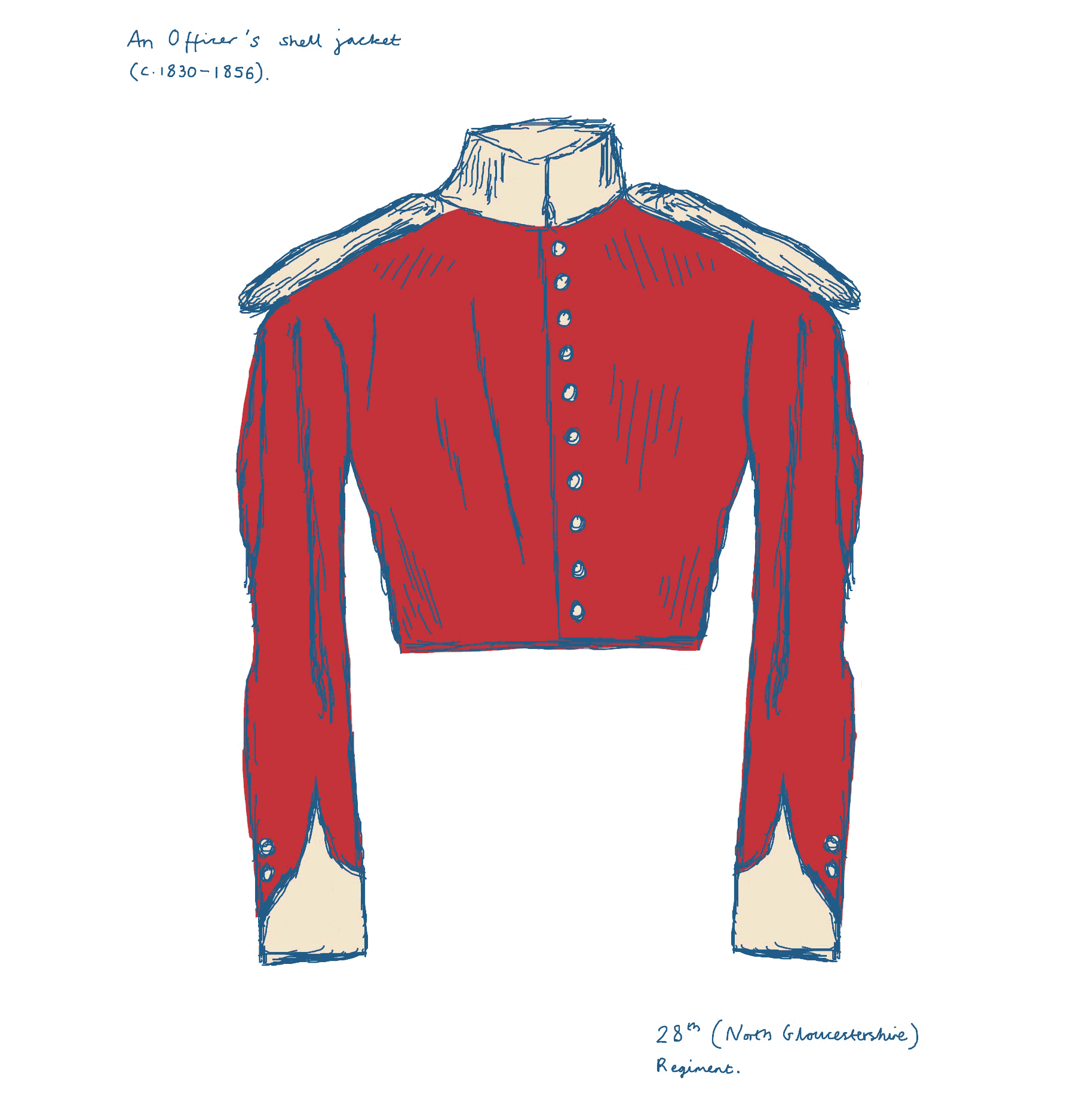
When searching for Regimental Museums in the UK, history enthusiasts and military buffs alike will find an incredible wealth of historical artefacts, personal accounts, and immersive exhibits across the country. One such treasure trove of British military history is the Soldiers of Gloucestershire Museum, located at Gloucester Docks. This museum offers visitors a deep dive into the stories of the Gloucestershire Regiment and Royal Gloucestershire Hussars, showcasing remarkable items of uniform, weaponry, and memorabilia from the regiment’s storied past.Among the many fascinating artefacts on display, one particularly evocative piece is the Officer’s Shell Jacket from the 28th North Gloucestershire Regiment, dating back to 1830-1856. This striking red coat not only represents the distinct uniform style of the period but is also linked to the regiment’s bravery in battle during the Crimean War.
The 28th North Gloucestershire Regiment and the Crimean War
The Crimean War (1853-1856) was one of the most significant conflicts of the 19th century, pitting the British, French, and Ottoman Empires against Russia. Among the British forces was the 28th North Gloucestershire Regiment, which played a crucial role in the campaign, particularly during the siege of Sevastopol.
The Battle of Alma (20 September 1854)
The 28th North Gloucestershire Regiment was present at the Battle of Alma, but as part of the Third Division Reserve, they were not engaged in combat. Although they did not take part in the fighting, this battle marked an important moment for the regiment—it was the last time the Colours of the 28th were carried into battle. Ensign James Williams was among the last men to have the honour of carrying the Colours.
The Siege of Sevastopol (October 1854 – September 1855)
Following Alma, the 28th Regiment took up positions in the trenches for the long siege of Sevastopol, one of the defining battles of the Crimean War. The regiment endured extreme weather, disease, and constant bombardments while maintaining pressure on the Russian defenders.While most of the regiment remained in the siege lines, a detachment of 100 men led by Lieutenant-Colonel Adams participated in the Battle of Inkerman (5 November 1854), where the Allies successfully repelled a Russian counterattack.
The Sharpshooters of the 28th
One of the most fascinating stories from the 28th North Gloucestershire Regiment during the Crimean War was the role of its sharpshooters. On 16 October 1854, Captain Thomas Maunsell volunteered to lead a group of crack shots chosen from each regiment in the Third Division. These sharpshooters were given orders to advance within 400-500 yards of the enemy’s fortifications, pick off Russian artillerymen, and remain in their positions for extended periods—sometimes up to 24 hours without relief.Maunsell later recalled the intense fighting during the siege:
"Thus the long and weary winter dragged along. As the trenches drew nearer Sevastopol, the sharpshooters got closer to the enemy. There were also the Russian sharpshooters to contend with, and we had many exciting affairs with them, and some personal encounters. Our casualties were heavy, but every evening the gaps were filled up by fresh volunteers, so that the party always went out in full strength."
For 76 consecutive days, Maunsell led his men until 31 December 1854, when he was severely wounded by a rifle bullet that broke his arm. He was carried back across open ground by his men under the gaze of the Russians, who, in an act of wartime humanity, did not fire upon the wounded officer. After treatment at Scutari Hospital under Florence Nightingale’s supervision, Maunsell recovered and later rose to the rank of Major-General.
 The Officer’s Shell Jacket: A Window Into the Past
The Officer’s Shell Jacket from the 28th North Gloucestershire Regiment is a beautifully preserved example of British military fashion and function from the mid-19th century. Featuring:
- Bright red wool fabric, synonymous with British Army uniforms.
- A short, cropped design, offering greater ease of movement for officers in the field.
- Silver buttons, symbolising the regiment’s distinguished status.
- White facings, a traditional feature that added to its striking appearance.
This jacket would have been worn by an officer leading troops into battle, making life-or-death tactical decisions under fire. It stands as a testament to the resilience and leadership required of British officers during this era of warfare.
Exploring the Soldiers of Gloucestershire Museum
For those interested in Regimental Museums in the UK, the Soldiers of Gloucestershire Museum offers an unparalleled opportunity to explore the stories of soldiers who fought in global conflicts from the 17th century to modern-day operations.Located at Gloucester Docks, the museum features:
- Uniforms, weapons, and medals from across the regiment’s history.
- Interactive displays, including the chance to step into a WWI trench experience.
- Personal stories and letters from soldiers, bringing history to life.
- A special section on the Battle of Imjin River, showcasing the incredible bravery of the Glorious Glosters in Korea (1951).
Whether you are a military history enthusiast, a family looking for an engaging day out, or a researcher seeking insight into Britain’s regimental past, the Soldiers of Gloucestershire Museum is a must-visit destination.
Plan Your Visit to the Soldiers of Gloucestershire Museum
📍 Location: Gloucester Docks, Gloucestershire🕘 Opening Hours: Visit our website for details🎟 Tickets: Available online and at the museum🔗 Discover more about the Officer’s Shell Jacket and other incredible artefacts at Soldiers of Gloucestershire Museum