
Into the Desert: The 2nd Royal Gloucestershire Hussars and the Road to Gazala
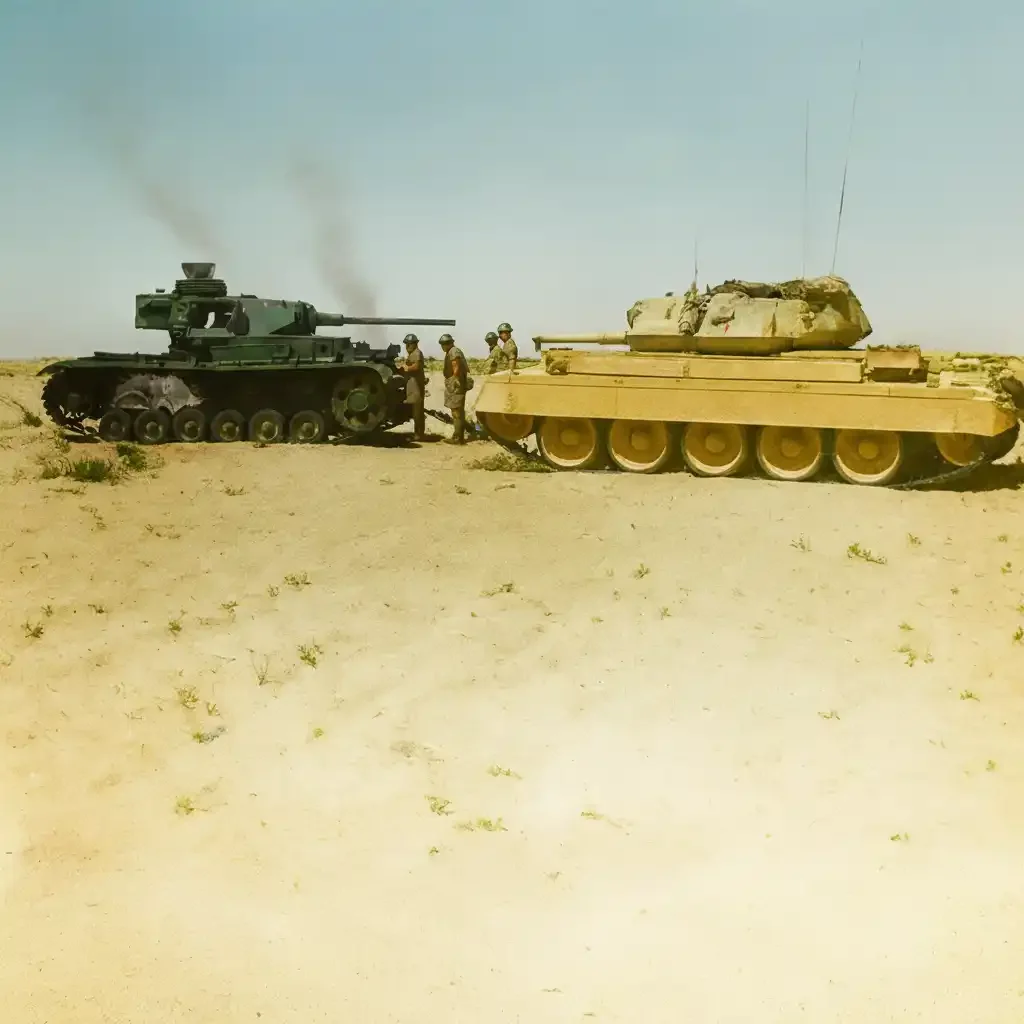
In the autumn of 1941, as the sun beat down over the harsh sands of North Africa, the 2nd Royal Gloucestershire Hussars (RGH) stood on the brink of a brutal baptism of fire. Drawn from the rolling hills of Gloucestershire to the dust-choked battlefields of Egypt and Libya, these Territorial soldiers were about to face one of the most formidable fighting forces of the Second World War: Rommel’s Afrika Korps.Today, their courage and sacrifice are remembered not only through regimental records, but also through the immersive Cruiser Tank exhibit at the Soldiers of Gloucestershire Museum. This compelling installation places visitors face-to-face with the reality of desert warfare — and with the faces of the Hussars who lived it.
A New Kind of War
 Formed as a second-line Territorial Army regiment at the outbreak of war in 1939, the 2nd Royal Gloucestershire Hussars were created to mirror their parent unit, the 1st RGH. Initially a cavalry regiment, they were quickly converted into an armoured regiment, learning to operate the notoriously unreliable but fast Cruiser tanks in anticipation of modern mechanised combat.By mid-1941, the regiment had arrived in Egypt, assigned to the 22nd Armoured Brigade, part of the famed 7th Armoured Division — the Desert Rats. As part of the Eighth Army, they trained in the desert heat, preparing for a confrontation with Rommel’s increasingly aggressive Axis forces.
Operation Crusader: The First Test
In November 1941, the British launched Operation Crusader, a major offensive designed to relieve the besieged garrison at Tobruk and push the Afrika Korps westward. For the 2nd RGH, it would be their first major action.Their Cruiser tanks, including the Crusader Mk II, were lighter and faster than their German counterparts but lacked adequate armour and firepower. Facing seasoned Panzer divisions, the Hussars suffered heavy losses in a series of chaotic and poorly coordinated tank engagements.
In one account from the battle, RGH crews reportedly fought on despite radio failures, sand-choked engines, and dwindling ammunition. Many tanks were lost, and entire squadrons were decimated.
While Operation Crusader ultimately succeeded in relieving Tobruk, the price paid by the Hussars was high. By January 1942, the regiment was withdrawn from the front to refit — exhausted and diminished.
Gazala: A Regiment Destroyed
After a brief period of rest and reorganisation, the 2nd RGH were once again called into action in May 1942 during the Battle of Gazala — a pivotal confrontation west of Tobruk. Here, British and Commonwealth forces clashed with Rommel in a series of complex armoured engagements across vast, featureless terrain.Despite fighting with tenacity and courage, the 2nd RGH was overwhelmed. German tanks outmanoeuvred them, supported by superior tactics and coordination. The regiment was effectively destroyed during the battle. Survivors were reassigned, and the unit was formally disbanded in June 1942.The Battle of Gazala was a strategic disaster for the British and led directly to the fall of Tobruk. For the 2nd Royal Gloucestershire Hussars, it marked the end of their active wartime service — but their sacrifice was not in vain. Their experience highlighted serious shortcomings in British armoured warfare doctrine, leading to significant improvements in tactics and equipment.
Remembering the Desert War at the Museum
Today, the Soldiers of Gloucestershire Museum offers a striking tribute to the men of the 2nd RGH through a life-sized mockup of a Cruiser Tank, complete with crew mannequins and desert scene staging. This immersive exhibit captures the harsh conditions of desert warfare, the claustrophobic reality inside a tank, and the vulnerability of young men sent to face one of history’s most skilled armoured commanders.
Explore the Collection
The museum’s online archive also offers rich insights into the North Africa campaign:
- Formation sign of 4th Armoured BrigadeBadge worn by troops including the 2nd RGH, showing their place in British armoured operations.
- Photograph: Crusader Tank with Roff, Taylor-Jones, Russell, DrewA rare glimpse into life on the front line — names and faces behind the steel.
- Photograph: Abandoned German Panzer IIIEvidence of British resistance — the enemy left behind in the wake of battle.
Legacy of the 2nd RGH
Though the 2nd Royal Gloucestershire Hussars were disbanded in 1942, their courage lives on through the men who went on to serve in other regiments and the post-war reformation of the RGH as part of the Territorial Army. Their story is one of determination in the face of adversity — of learning on the job under fire, in one of the most unforgiving theatres of war.
Plan Your Visit
If you’d like to walk in the tracks of these desert warriors, we invite you to visit the Soldiers of Gloucestershire Museum. Stand beside the Cruiser Tank, explore rare photos and artefacts, and discover how Gloucestershire’s citizen soldiers made history in the sands of North Africa.
“The tank may have rusted, but the memory lives on.”