
The Battle of Salamanca: The Gloucestershire Regiment’s Forgotten Peninsular War Story
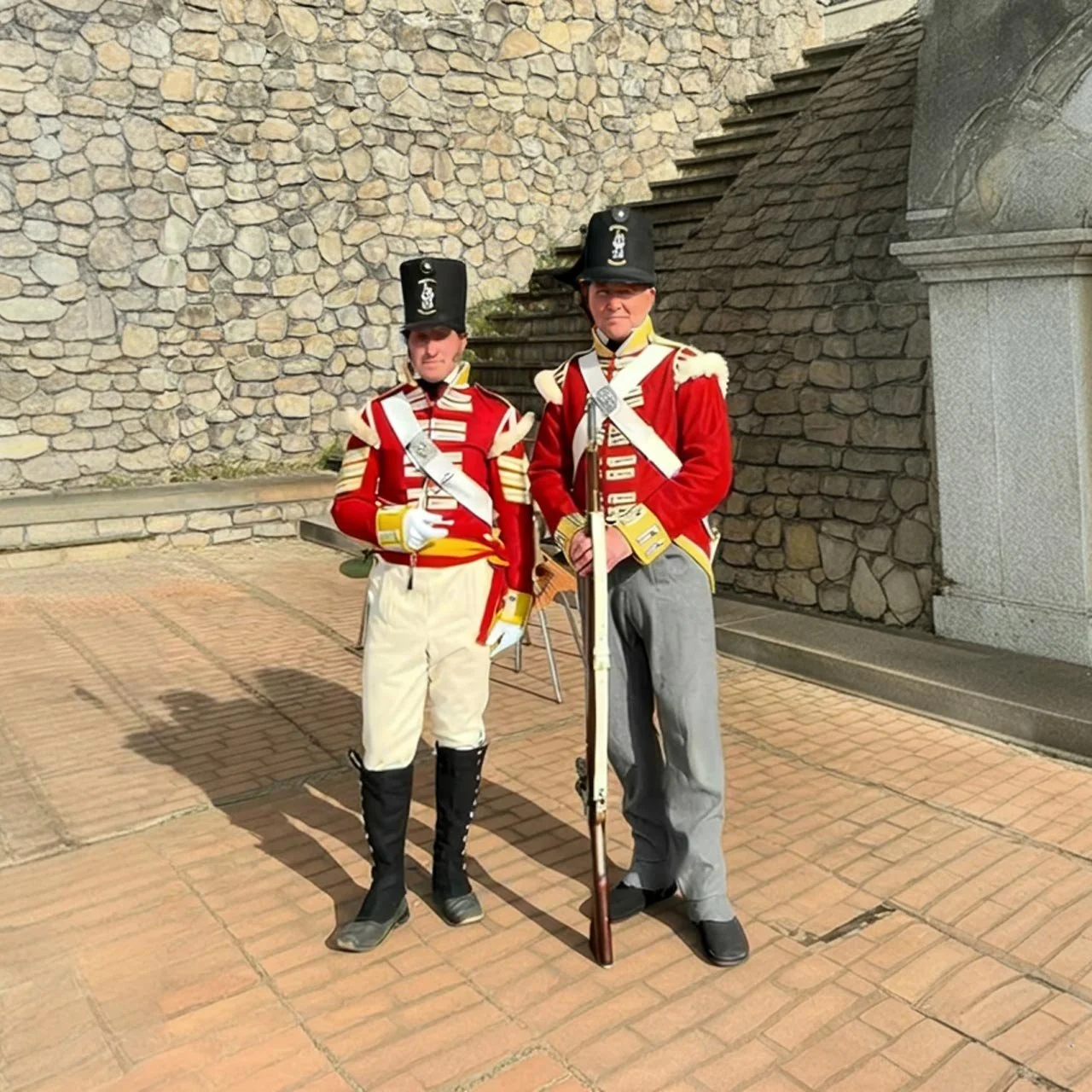
Fought on 22 July 1812, the Battle of Salamanca was one of the decisive moments of the Peninsular War - and one of the most important battles in the history of the 61st (South Gloucestershire) Regiment of Foot, later merging with the 28th (North Gloucestershire) Regiment of Foot to become the Gloucestershire Regiment.
For many visitors to the Soldiers of Gloucestershire Museum, the stories of the Gloucestershire Regiment are most closely associated with the First World War, the Second World War, Korea and more recent service. Yet the Regiment’s roots reach much further back, into the age of red coats, colours, muskets and the long struggle against Napoleon.
One of the most dramatic episodes in that earlier story took place on the open, sun-baked hills east of Salamanca in Spain. There, on 22 July 1812, British, Portuguese and allied troops under the command of the Duke of Wellington defeated a French army led by Marshal Marmont. It was a battle of movement, deception, timing and courage — and for the 61st Regiment of Foot, it came at a terrible cost.
This short digital exhibition helps tell that story and explains why Salamanca deserves to be remembered.
What was the Peninsular War?
The Battle of Salamanca was fought during the Peninsular War, part of the wider Napoleonic Wars between Britain and its allies and Napoleonic France.
The war in the Iberian Peninsula began after Napoleon’s forces occupied Portugal and Spain. In 1808, British troops landed in Portugal under Lieutenant-General Sir Arthur Wellesley, who would later become the Duke of Wellington. What followed was a long and demanding campaign across Portugal and Spain, as Wellington sought to drive French forces from the Peninsula.
The struggle was not straightforward. Wellington often faced larger French armies and had to manoeuvre carefully to prevent them from combining against him. His success depended on discipline, intelligence, mobility and the ability to strike at the right moment.
By 1812, Wellington had already achieved important victories and captured key strongholds, including Ciudad Rodrigo and Badajoz. These successes opened the way for an advance deeper into Spain. His next major confrontation would come near the city of Salamanca.
The road to Salamanca
In the summer of 1812, Wellington moved to confront Marshal Marmont’s Army of Portugal. Marmont, an experienced French commander, attempted to outmanoeuvre Wellington and threaten his line of retreat back towards Portugal.
The two armies moved across the country east of Salamanca, each trying to gain advantage. By 21 July, they were close to the Arapiles, two prominent flat-topped hills that dominated the surrounding landscape. These hills — the Greater Arapile and the Lesser Arapile — would become central to the battle.
Wellington’s army occupied positions hidden behind ridges near the Lesser Arapile. Marmont believed the British and Portuguese forces were retreating and began extending his army in an attempt to cut them off. This movement created a dangerous gap in the French line.
Wellington recognised the opportunity immediately.
According to tradition, he saw that Marmont had overextended his army and exclaimed that he had “forty thousand men in forty minutes.” Whether or not the words were exactly as remembered, the meaning was clear: Wellington had spotted a rare chance to defeat a major French army in the open field.
The battle begins
Skirmishing began late in the morning on 22 July. By early afternoon, the French had seized the Greater Arapile and placed artillery there.
Marmont continued to extend his left flank, believing Wellington was retreating. But the movement made the French army vulnerable. At around 3.30pm, Wellington launched a sudden attack.
The first major blow was delivered by Sir Edward Pakenham’s 3rd Division against the exposed French left. This was followed by cavalry attacks and further infantry assaults. The speed and surprise of the attack shattered several French divisions.
The battle then developed across the centre and right of the French position. At around 4.15pm, Wellington’s 4th and 5th Divisions attacked the French centre. Later, the 4th and 6th Divisions were involved in the assault on the Greater Arapile.
The fighting was intense. The French resisted strongly, and the British and Portuguese troops suffered heavy casualties. But by evening, Wellington’s forces had taken the key ground and forced the French army into retreat towards Alba de Tormes.
Salamanca was a major victory. It confirmed Wellington as an offensive commander of exceptional ability and marked a turning point in the Peninsular War.
Armies and casualties
The armies at Salamanca were large by the standards of the campaign. Marshal Marmont’s Army of Portugal numbered around 50,000 men, with infantry, cavalry and artillery. Wellington’s army was slightly smaller, with around 48,500 men, made up of British, Portuguese and allied troops.
The casualties were severe. The British and Portuguese suffered around 5,000 killed and wounded. French losses were greater, with thousands killed or wounded and many more taken prisoner. The French also lost guns and equipment.
For the wider campaign, the victory was highly significant. It opened the road to Madrid and demonstrated that Wellington could do more than defend Portugal — he could defeat a major French army in Spain.
For the 61st Regiment of Foot, however, Salamanca was remembered not simply as a strategic victory, but as a moment of extraordinary sacrifice.
The 61st Regiment of Foot at Salamanca
The 61st Regiment of Foot, later known as the 61st South Gloucestershire Regiment of Foot, played a crucial role in the fighting around the Greater Arapile.
The Regiment formed part of the 6th Division. During the battle, this division helped drive off a French counter-attack led by Bonnet’s Division and then fought against Ferrey’s Division. The action was fierce and costly.
The most dramatic moment came during the final charge. As the 61st advanced under heavy fire, the officers and sergeants carrying the Colours were struck down. The Colours were not merely flags; they represented the honour, identity and spirit of the Regiment. To lose them in battle was unthinkable.
With the officers and colour-sergeants fallen, two privates — Crawford and Coulson — seized the Colours and carried them forward to the summit of the Greater Arapile.
It was an act of remarkable courage. The Regiment had suffered terribly. Six reliefs of officers and sergeants had reportedly been shot down under the Colours. Of the 27 officers and 420 men who went into action, 24 officers and 342 men were either killed or wounded.
These losses show the scale of the Regiment’s sacrifice. Salamanca was not just another battle honour. It was a defining episode in the story of the Gloucestershire Regiment’s predecessors.
From the 61st Foot to the Gloucestershire Regiment
The 61st Regiment of Foot later became part of the Gloucestershire Regiment in 1881, when reforms of the British Army linked regiments more closely with counties and local recruiting areas.
The Gloucestershire Regiment would go on to serve in many later conflicts, building a reputation for endurance, discipline and courage. In 1994, it became part of the Royal Gloucestershire, Berkshire and Wiltshire Regiment, and today its lineage continues within The Rifles.
This makes Salamanca part of a much longer Gloucestershire military story. It connects the county not only with the battles of the twentieth century, but with the Napoleonic Wars and the struggle against French domination in Europe.
Why Salamanca matters to the museum
The Soldiers of Gloucestershire Museum exists to tell the stories of soldiers from Gloucestershire and the regiments connected with the county. Some of those stories are well known. Others are less visible, waiting to be rediscovered.
The Battle of Salamanca is one of those stories.
It matters because it shows the Regiment at a crucial moment in British and European history. It matters because it reveals the human cost of battle — not in abstract numbers, but in the experience of a single regiment losing so many officers and men in one afternoon. And it matters because it gives us individual acts of courage, such as those of Privates Crawford and Coulson, who carried the Colours forward when others had fallen.
For a museum, this is a powerful story to tell. It combines grand strategy with personal bravery. It links Gloucestershire to Spain, the Napoleonic Wars and Wellington’s campaigns. It helps visitors understand that regimental history is not simply a list of battles and dates, but a chain of real human experiences.
Remembering Salamanca today
More than two centuries have passed since the Battle of Salamanca. The landscape of the Arapiles remains, but the men who fought there are long gone. Their story survives through regimental history, battle honours, memorials and the work of museums.
For the Soldiers of Gloucestershire Museum, Salamanca offers an opportunity to bring an underrepresented chapter of the Regiment’s history back into public view. Through digital interpretation, video and future displays, the museum can help visitors understand why this battle mattered — and why it still deserves to be remembered.
The Battle of Salamanca was a victory for Wellington. It was a turning point in the Peninsular War. But for Gloucestershire, it was also a story of sacrifice, courage and regimental identity.
And that is why Salamanca belongs at the heart of the museum’s story.