
Discover the remarkable story of Ivor Gurney, the Gloucester-born poet and composer whose experiences of the First World War helped establish him as one of Britain's greatest war poets.
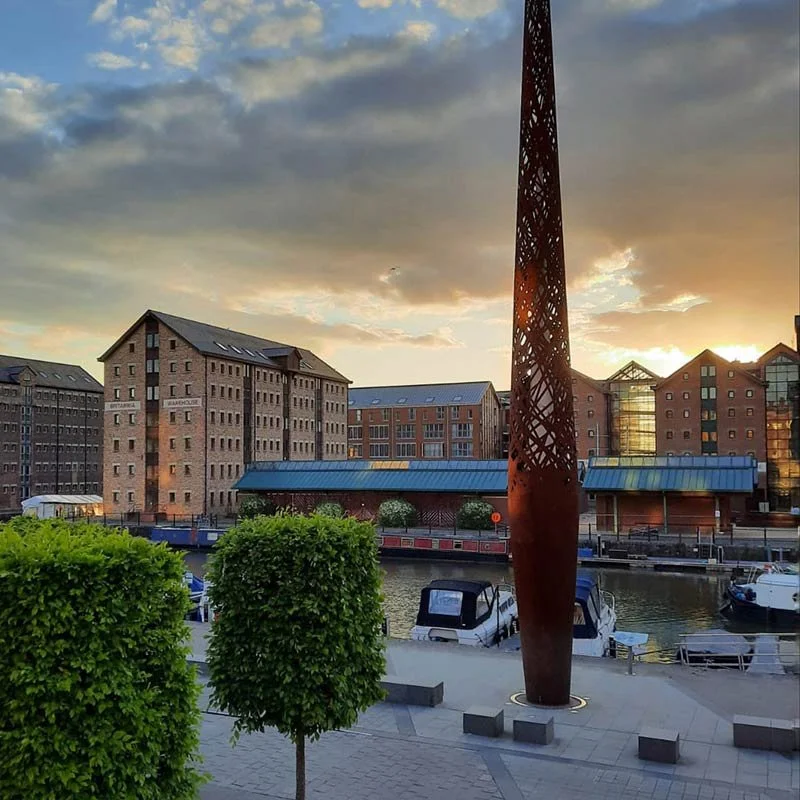
Just a short walk from the Soldiers of Gloucestershire Museum, overlooking Gloucester's historic docks, stands a striking 21-metre-high sculpture known as The Candle. While its contemporary design makes it an interesting landmark in its own right, the sculpture has a deeper connection to Gloucester's history. It was inspired by the words of local poet Ivor Gurney and his poem Requiem, commemorating a man whose extraordinary life and literary legacy remain closely connected to the city.
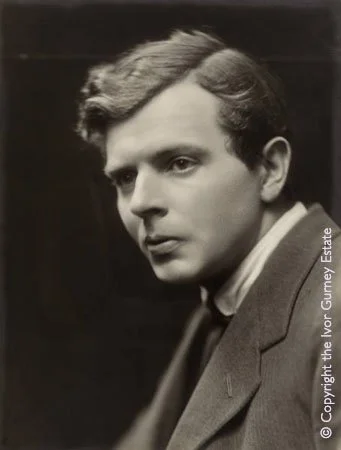
A Gloucester-born talent
Ivor Bertie Gurney was born in Gloucester on 28 August 1890, the son of David Gurney, a tailor, and Florence Gurney. From an early age, he demonstrated exceptional musical talent, becoming a chorister at Gloucester Cathedral in 1900. His education at the King's School, alongside his musical studies, helped nurture his creative abilities.
Gurney went on to win a scholarship to the prestigious Royal College of Music in London in 1911, where he studied composition. However, despite his musical promise, Gloucester and the surrounding Gloucestershire countryside remained a constant source of inspiration throughout his life.
The rolling Cotswold hills, the River Severn and the familiar landscapes of his home county would become recurring themes in his poetry, particularly during the difficult years he spent serving overseas.
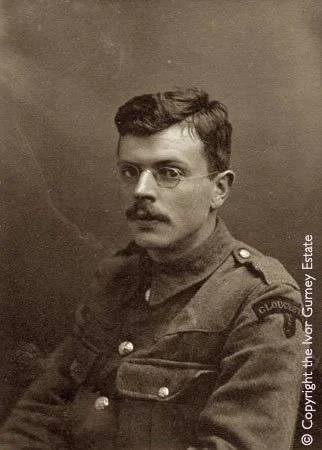
From Gloucester to the Western Front
When the First World War broke out in 1914, Gurney was determined to enlist. Initially rejected because of his poor eyesight, he eventually joined the 2/5th Battalion, Gloucestershire Regiment, in February 1915.
Serving as a private on the Western Front, Gurney experienced the brutal reality of trench warfare. He was wounded in the arm in April 1917 and later gassed during the Battle of Passchendaele in September of the same year.
It was during his time in the trenches that poetry became an increasingly important part of his life. Away from his musical studies, writing offered Gurney a way to express the horrors of war, the experiences of his fellow soldiers and his longing for home.
His first collection, Severn and Somme, was published in 1917 while he was still serving. The title captured the two worlds that shaped his writing: the familiar landscapes of Gloucestershire and the battlefields of France.
Unlike some of his contemporaries, Gurney's poetry did not simply describe the experience of war. His writing explored the emotional cost of conflict, the bonds between soldiers, the devastation of battle and the powerful pull of home.
The poetry of war and home
Gurney's work is particularly distinctive because it combines the harsh realities of the Western Front with an enduring love of the Gloucestershire countryside.
His poems often contrast the destruction and suffering of war with memories of peaceful rural landscapes. This sense of homesickness is especially evident in his writing, where familiar places, rivers and hills become symbols of comfort and belonging.
His second collection, War's Embers, followed in 1919. Although Gurney continued to write throughout his life, much of his finest poetry remained unpublished during his lifetime.
Following the war, he struggled with severe mental illness and spent the final years of his life in psychiatric hospitals. Despite these difficulties, he continued to produce an extraordinary body of poetry and music.
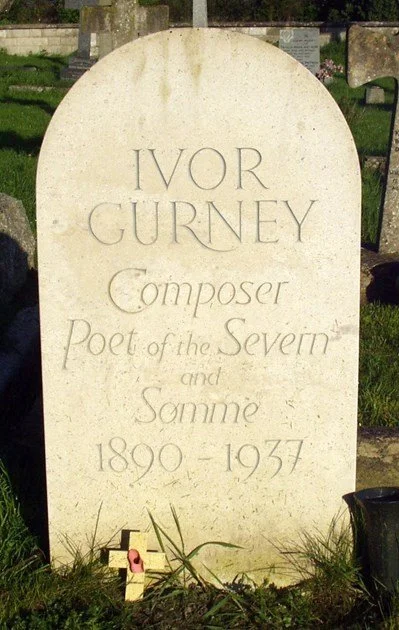
He died of tuberculosis on Boxing Day 1937, aged just 47, and was buried at Twigworth in Gloucestershire, returning at last to the county that had inspired so much of his work.
The Candle: A lasting tribute to Ivor Gurney
Today, visitors to Gloucester can discover a lasting tribute to Gurney in the form of The Candle, a 21-metre-high public sculpture installed in 2010 as part of the regeneration of Gloucester's historic docks.
Inspired by his poem Requiem, the sculpture features lines from the poem inscribed at its base. Its position near the docks provides a fitting connection to the city's history and to a poet whose life was so deeply rooted in Gloucester.
It is a reminder that the city's heritage extends beyond its historic buildings and military collections. Gloucester has also been home to remarkable writers, artists and musicians whose contributions have reached far beyond the county.
Remembering one of Britain's great war poets
Although Ivor Gurney struggled to achieve widespread recognition during his lifetime, his reputation has grown considerably since his death. Today, he is recognised as one of the most important poets of the First World War, with his work frequently appearing in war poetry collections and literary studies.
His writing offers a deeply personal perspective on the conflict, capturing not only the suffering of soldiers but also their humanity, friendships and longing for home.
For the Soldiers of Gloucestershire Museum, Gurney's story is an important part of the regiment's history. As a serving soldier of the Gloucestershire Regiment, his experiences connect his poetry directly to the men who fought during the Great War.
Next time you visit Gloucester's historic docks, take a moment to stop by The Candle and discover the story behind it. And when visiting the Soldiers of Gloucestershire Museum, explore the history of the regiment and the remarkable individuals whose lives were shaped by service and conflict.
Ivor Gurney's words ensure that the experiences of a generation of soldiers, and the Gloucestershire landscape they longed to return to, are never forgotten.
